Raw vs. Graded: A Real Decision Framework
People talk about raw versus graded like it is a moral question. It is not. It is a spread question.
Sometimes the slab is cheap insurance. Sometimes the slab premium is absurd and the raw card is the buy. Sometimes both are wrong because the eye appeal is lying to you or the card is altered and nobody has admitted it yet.
The right question is not, "Do I prefer raw or graded?" The right question is, "What risk am I getting paid to take?"
Start with the four buckets
Every card you are looking at falls into one of four practical buckets:
- Raw and obvious
- Raw and borderline
- Graded and liquid
- Graded and overprotected
Raw and obvious means the condition is clear, the card is real, the issue is familiar, and the spread between raw and slabbed prices still leaves room. A clean 1965 Topps Namath with honest corner wear, decent centering, and no sizing weirdness can live here.
Raw and borderline means one of the danger flags is blinking: trim concern, recolor suspicion, surface wrinkle, bad scan, or seller language doing too much work. "Looks better than grade" is not a description. It is a warning label.
Graded and liquid means the slab is solving a real problem. Iconic vintage rookies, high-dollar Hall of Famers, scarce backs, and condition-sensitive issues fit here because the market pays for authentication, easier resale, and a narrower argument.
Graded and overprotected is where collectors light money on fire. A low-dollar card in a slab with no real spread, no added liquidity, and no plan beyond "it feels safer" is just expensive plastic.
Use a simple spread model
Before you buy raw with the idea of grading, do napkin math.
Take expected sale value after grading. Subtract:
- grading fee
- shipping both ways
- insurance
- selling fees
- time
- the chance you miss the grade
If you buy a raw card for $450 because PSA 6 sells for $900, you are not looking at a $450 margin. If fees and frictions total $100 and the card comes back PSA 4 instead of 6, your margin just evaporated. On condition-sensitive vintage, one wrinkle or one short edge can turn a clever buy into dead inventory.
The cleaner question is this: If the card came back one full grade lower than I hope, would I still be okay owning it?
If the answer is no, you are speculating, not buying.
Buy the card. Not the story you plan to tell yourself after the submission.
When raw is the better buy
Raw is attractive when you can judge condition confidently and the market is still lazy.
That usually means:
- mid-grade vintage where collectors care more about honesty than plastic
- issues with weak scans but predictable paper stock
- cards where eye appeal matters more than the label number
- shows and tables where raw material is under-described
A strong raw VG-EX 1954 Topps Ted Williams can be a better buy than a weakly presenting PSA 4 if the card is centered, the color is live, and the corners match the grade. Same with a 1948 Leaf Robinson that carries rough factory cuts but avoids paper loss and big creases. The number on the holder does not always capture the experience of owning the card.
Raw is also where you still find dealer mistakes. Not every dealer wants to turn every solid vintage card into a grading project. Some just want velocity. That is good for buyers who know the difference between honest wear and silent damage.
When graded is the better buy
Graded usually wins when authentication risk is expensive.
That includes:
- heavily faked cards like T206 Wagner or 1952 Topps Mantle
- cards where trimming is common
- issues with big jumps between adjacent grades
- cards you may need to resell quickly
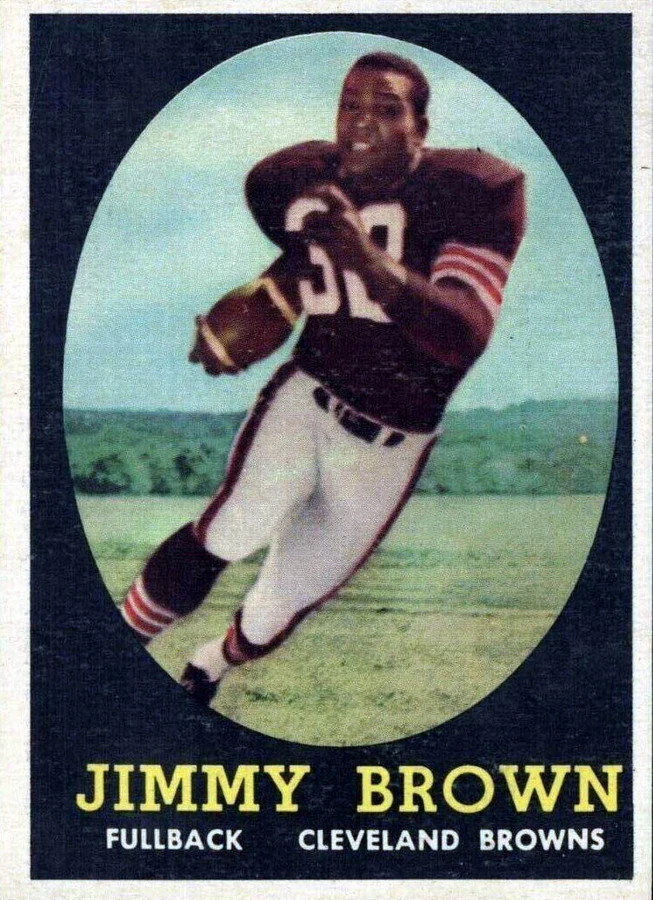
A slab narrows the argument. It does not end it, but it narrows it. If you are buying a big card remotely, especially through auction, that matters. The market for a PSA 3 Jim Brown rookie is simply deeper and easier than the market for a "looks EX from the scan" raw example with vague seller notes.
Liquidity is part of value. If you need to move inventory in a week, the holder can be worth more than the grading difference on paper.
The middle ground collectors ignore
A lot of smart buying happens in the ugly middle:
- lower straight grades with strong eye appeal
- misdescribed raws that are too nice for the ask
- slabbed cards with ugly labels but solid sub-story
That last one matters. A PSA 2 with a clean front and one back wrinkle may be a better card for the money than a dull PSA 3 with dead centering and soft print. Vintage buyers who only shop by number usually overpay.
This is also where SGC versus PSA matters. Some cards sit in SGC holders at a discount to comparable PSA numbers even when the card itself is just as saleable to a collector who actually understands the issue. If you are buying for inventory turnover, that gap matters. If you are buying for your box, it matters even more.
Red flags that flip the answer
Here is where I stop caring whether a card is raw or graded and start caring about whether I want any part of it.
- Measurements that feel off but the seller never mentions size
- Gloss that pools wrong for the era
- Suspiciously sharp edges on a beat-up card
- High grade with bad registration that should have capped it lower
- Seller language built around "estate find" instead of specifics
Even graded cards deserve skepticism. Trimming gets missed. Recolor gets missed. Holders create confidence, and confidence makes people sloppy.
Buy with an exit in mind
Collectors hate hearing this, but your exit matters even if you swear the card is for the PC.
If you may trade, consign, or liquidate later, choose the form that future buyers understand fastest. That often means graded for iconic cards, raw for solid lower-middle vintage where the next buyer is still going to inspect the card itself before the label.
Think in lanes:
- PC lane: eye appeal first, holder second
- Inventory lane: liquidity first, argument-risk second
- Submission lane: edge only if your downside still works
The mistake is mixing lanes. Buying a raw project card at full graded-comparable money because you "might send it" is how people get buried.
The short answer
Raw is not brave. Graded is not smart. Either one can be the right buy if the spread pays for the risk.
The collector edge is not choosing a side. It is knowing what problem the slab solves, what it fails to solve, and when the raw card is being priced like nobody bothered to look closely.
What to do with this
- For the next card you consider, write down the likely grade range before you look at the asking price.
- Run the downside math on any raw card you think you will grade; assume you miss by one full grade.
- Split your buying lane upfront: personal collection, inventory, or submission. Then price the risk accordingly.