T206 White Border Tobacco Primer
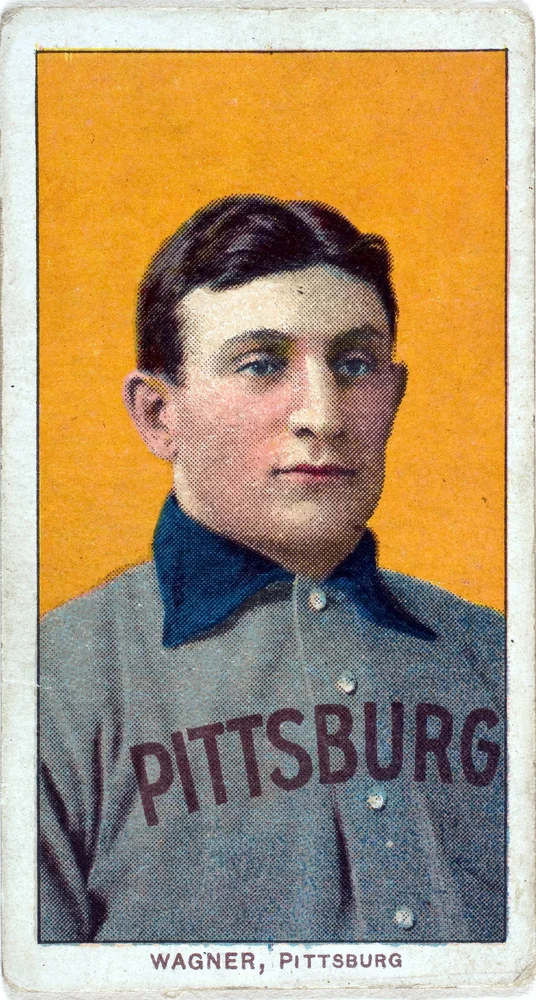
If you only know T206 as "the Wagner set," you know the headline and not the hobby.
T206 is really a world. More than 520 fronts depending on how you count the checklist, multiple tobacco brands on the reverse, portraits that still beat most later issues, and enough variation in back scarcity to create a second collecting language on top of the players themselves.
That is why serious collectors stay with it for years. There is always another layer.
What the set is
Produced from 1909 through 1911 and inserted with tobacco products, T206 is the backbone of prewar baseball collecting. The fronts are lithographed portraits and action images. The backs carry brand advertising. Piedmont and Sweet Caporal are the familiar starting point, but once you go deeper, the back matrix turns into its own obsession.
This is where collectors start saying things like "same pose, different universe" and for once they are not exaggerating.
Why the artwork matters
T206 survives because the set is beautiful, not just old.
Cobb red portrait. Mathewson dark cap. Johnson portrait. Young glove shows. Chance yellow portrait. Even plenty of commons have real visual heat. The white border frames the image cleanly and also gives you a built-in flaw detector: chipping, staining, and wear show immediately.
The best T206 cards look like prints that accidentally became cardboard.
The famous cards and the trap they create
Yes, Honus Wagner matters. So do Eddie Plank and the Magie error. Those are hobby landmarks. They are also the reason casual observers misunderstand the set.
Most T206 collecting happens far below those cards, in a market built around:
- Hall of Fame portraits
- pose selection
- back combinations
- honest mid-grade eye appeal
If you think T206 is only about the impossible cards, you miss what makes it actually collectible. A collector can spend years learning backs, poses, and condition standards without ever sniffing a Wagner. That is normal, not second-tier.
Backs are not a side note
Back collecting is one of the reasons T206 never gets old.
Common backs like Piedmont and Sweet Caporal keep the set accessible. Scarcer backs like Drum, Uzit, Broad Leaf 460, Lenox, or Brown Hindu can turn an otherwise familiar front into a serious card. Not every player exists with every back, and not every scarcity level behaves the same. That creates a matrix rather than a checklist.
This is also where new buyers get in trouble. They see a rare back and pay up without knowing whether the front-back combination is truly difficult or just less commonly offered. T206 rewards homework brutally.
Condition on T206 is its own discipline
T206 cards are small, old, and unforgiving.
Common issues:
- rounded corners
- tobacco staining
- back scrapbook damage or paper loss
- wrinkles
- off-centering
- edge chipping along the white borders
A low-grade T206 can still present beautifully because the artwork carries it. That is one reason the set remains liquid across grade levels. But the white borders also mean that small flaws stay visible. Collectors who say "I do not mind wear" often discover that they very much mind wear when it eats the border on a portrait they love.
Raw buying on T206 requires extra discipline because trimming and restoration are not theoretical risks here. If a card seems too clean in the wrong way, slow down.
Portraits versus action poses
This matters more than new buyers expect.
Portraits usually carry stronger demand because they present more like miniature art. Action poses can still be excellent cards, but the hobby tends to reward the portraits more consistently. That is why two cards of the same player can behave differently even without a back wrinkle in play.
The card you buy is not just a name. It is a specific image inside a set where image preference is part of the market.
Commons are not actually common
This is one of the best lessons T206 teaches.
A "common" front on a common back may be available. That does not mean it is trivial in attractive condition. Once you ask for centered, crease-free, clean-border examples, the field narrows. Once you ask for a specific scarce back too, the word common stops being useful.
That is why collectors who come from later Topps issues sometimes misread T206. They assume checklist status maps cleanly to price. It does not. Presentation and back scarcity scramble the order fast.
Building strategies
There are a few sane ways to collect T206:
Hall of Famers first
Expensive, obvious, and satisfying. Good for collectors who want a recognizable anchor group.
Portrait run
One of the best visual ways to build. You get the art value of the set without pretending you are doing a master back run.
Back project
For advanced collectors. Fun, dangerous, and easy to underestimate.
Honest low-grade type collecting
Still one of the hobby's best ways to own major history without pretending every card needs to be investment-grade.
The pricing mistake
Collectors overpay when they ignore which part of the T206 equation they are actually buying.
Are you paying for player? Are you paying for pose? Are you paying for back? Are you paying for condition?
If you do not know, you are vulnerable to seller framing. "T206 Hall of Famer" does not tell you much. "Centered portrait with clean Sweet Caporal back and no paper loss" tells you much more.
T206 is not hard because it is old. It is hard because there are too many meaningful ways for a card to matter.
Why the set still sets standards
Because it combines art, scarcity, variation, and durability as a collecting project. It gives beginners a door in and advanced collectors a rabbit hole deep enough to disappear into.
The Wagner story brought people to T206. The rest of the set is why they stay.
What to do with this
- Decide whether you care most about player, pose, back, or grade before shopping T206; do not try to optimize all four at once.
- Price white-border eye appeal directly, because small edge and stain issues show faster on this issue than on later sets.
- Learn a few common-versus-scarce back patterns before paying a premium for any advertised "rare back" example.