Rookie Card Mythology
Ask a casual buyer why a card is worth money and you will hear the same answer more often than any other: "It's his rookie." The rookie card sits at the center of how the modern hobby talks about value. It is treated as a fixed, almost legal category — the one card that matters, the foundation everything else is priced against.
Most of that is true for a handful of players and invented for everyone else. The rookie premium is one of the most real forces in the market and one of the most aggressively manufactured. Both things are true at once, and telling them apart is most of the skill.
What a rookie card actually is
There is no single definition, which is the first problem.
The cleanest working definition: a rookie card is the first widely distributed, nationally available card of a player produced by a major manufacturer in a base or standard set. That definition is doing a lot of quiet work, and every clause is a place where people disagree.
A few terms you need straight:
- True RC — the first mainstream card in a standard set, the one most collectors will agree counts.
- XRC (extended rookie card) — an earlier card in a limited or update-style release, often a boxed set or a regional issue, that predates the true RC but had narrow distribution.
- Prospect / pre-rookie cards — minor-league or draft-pick cards printed before the player reached the top level at all.
A player can easily have three "first" cards under three different definitions. The XRC came out earliest. The true RC is the one with the logo most people recognize. The prospect card is the one a dealer will tell you is the real first card if it happens to be the one he is holding. None of these is wrong. They are answers to different questions.
The logo era, and the drift in the definition
For a long time the definition was loose because nobody needed it to be tight. Then the manufacturers got involved.
The introduction of an official rookie-card logo — a marker printed on the card itself designating it as the league-sanctioned rookie — did two things. It made the category legible to beginners, and it quietly transferred authority over the definition from collectors to the licensors.
That sounds like a cleanup. In practice it narrowed and standardized "rookie" right at the moment the hobby was producing more parallels, inserts, and short prints of every player than ever before. The logo says "this is the rookie." It does not say "this is scarce" or "this matters." A logo on a card printed in enormous quantity is a designation, not a moat.
The drift is this: the word "rookie" used to describe a fact about a player's career. It now describes a marketing tier inside a product line.
Why the premium is real — for some players
Strip away the branding and a genuine economic reason remains. For a true icon, the rookie card is the single most contested object tied to the most contested name. It is the card collectors most want to own as the card. Demand concentrates there, and concentrated demand is what makes a market.
The premium is real when:
- The player is an enduring, generational name, not a hot rookie of one season.
- The rookie card is genuinely scarce in high grade — the population at the top of the scale is thin.
- There is broad agreement on which card is the rookie, so demand pools into one object instead of splitting.
When all three hold, the rookie card behaves like a blue-chip asset. The name carries it, the scarcity defends it, and the consensus keeps the bidding in one place.
Why it is marketing for everyone else
For most players, none of those conditions hold, and the rookie premium is a story sold to people who confuse "first" with "best."
Consider what the modern rookie usually is: a card of an unproven player, printed in volume during the most over-produced era in the hobby's history, in one of a dozen parallel versions, carrying a logo that certifies the category and nothing about the supply. The "rookie premium" on that card is a bet on a career that has not happened yet, dressed up as a bet on a scarce object.
The tell is simple. Ask whether the premium survives if the player's career flattens out. For an icon, it does — the card is wanted regardless. For a prospect, it evaporates, because the only thing holding the price up was the projection. A premium that depends on the player getting better is not a rookie premium. It is speculation with a rookie label on it.
Pre-war cards never heard of rookies
The cleanest proof that "rookie" is a hobby construct, not a natural law, is that the most valuable cards ever made do not use the concept at all.
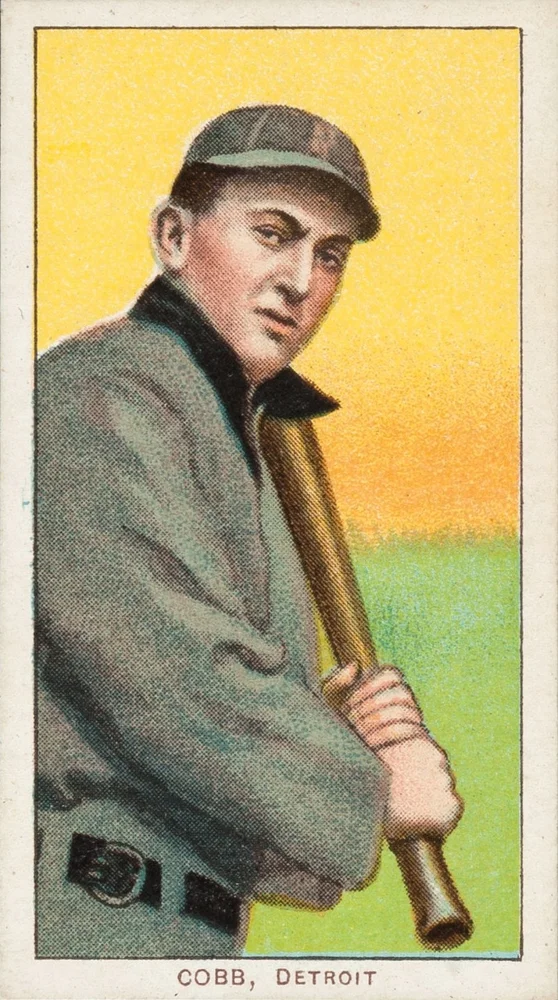
The great pre-war issues were not organized around a player's first card. They were tobacco and confectionery inserts, sold as sets and as advertising, with no notion of a "rookie year" attached to a cardboard release. The most famous and expensive cards from that era are valued for scarcity, condition, the aura of the set, and the player's stature — not because anyone certified them as a debut.
This matters because it shows what was actually driving value before the rookie story was invented: rarity and significance. The rookie framework came later and bolted a new organizing idea onto a market that had done fine without one. When a modern buyer treats "rookie" as the universal first principle of value, they are applying a relatively recent invention to a hobby whose crown jewels predate it entirely.
First Bowman, MLB debut, and the manufactured confusion
Two specific confusions cost people real money.
First card versus MLB debut. Plenty of stars now have a "first" card printed years before they reached the majors — a draft, prospect, or amateur issue. That card is genuinely first chronologically, and the market sometimes treats it as the rookie. Sometimes it does not. Whether the early card or the later mainstream card wins is decided by collector consensus, not by the calendar. Buying the chronologically-first card on the assumption that "earliest = most valuable" is a good way to overpay for the version the market did not crown.
First-brand chronology in general. When two manufacturers issue a player in overlapping years, the one that printed first does not automatically own the rookie crown. The card that becomes the icon does. The hobby routinely awards the premium to the later, more recognizable, better-distributed card and leaves the technically-earlier one trailing. "Got there first" is an argument collectors make; it is not a rule the market follows.
The pattern underneath both: chronology is a fact, but the rookie premium attaches to consensus, and consensus does not care which printing plate ran first.
When the non-rookie wins
The cleanest counterexample to rookie supremacy is that an icon's most valuable card is frequently not his rookie at all.
The 1952 Topps Mantle is the obvious case. It is not Mantle's rookie — an earlier mainstream card holds that title — and it routinely outruns the rookie anyway. The reason is everything the rookie framework ignores: it became the defining image, it sits in a landmark set, it is genuinely scarce in top grade, and it carries a backstory the market never tired of. The hobby decided that card was the symbol, and the symbol beat the rookie.
This happens whenever a non-rookie card accumulates more iconic weight than the first card did. The rookie is a category. Iconic status is a verdict. When the two diverge, the verdict wins.
How to value a "rookie" rationally
Treat "rookie" as one input, not the answer. A short checklist:
- Is there consensus on which card is the rookie? Pooled demand beats split demand. If the title is contested, the premium is diluted.
- Is it scarce where it counts? Scarcity in high grade, not raw print run, is what defends a price.
- Does the player carry the card, or does the card carry the player? Icons hold value through bad seasons. Prospects do not.
- Is there a non-rookie that the market treats as the real grail? If so, that is often the better asset, rookie label or not.
- Strip the logo. Ask what the card would be worth on scarcity and stature alone. The gap between that number and the asking price is the marketing premium — decide consciously whether you want to pay it.
The rookie premium is not a myth. The myth is that it is universal. For the names that endure, the rookie is a real and defensible asset. For everyone else, it is a label that lets a common card charge a scarce card's price. The work is knowing which one you are holding before you pay for it.