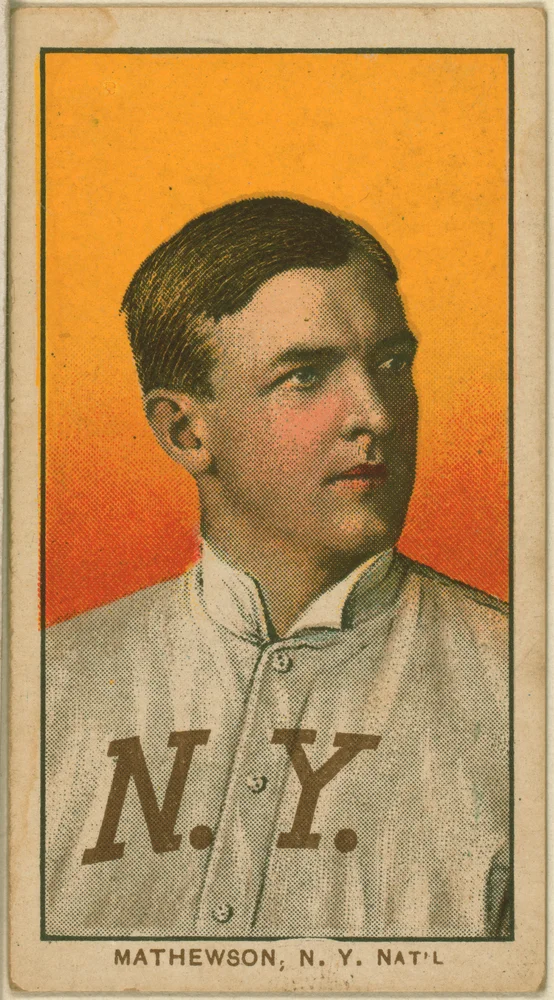
Centering, Corners, and the Language of Grading
A grade is a verdict, but it is not a mystery. The graders at PSA, SGC, and BGS are not consulting taste. They are running a card through four fixed questions and writing down the answers. If you know the four questions, you can answer them yourself, in your own light, for free, before you ever pay a submission fee.
This is worth doing for one reason: grading fees are sunk the moment you ship. A card you were sure was a 9 that returns a 7 does not refund the difference. The collectors who lose money on grading are almost always the ones who let the grader find the flaw first.
So here is the grader's job, decoded. Learn to see what they see.
The Four Pillars
Every numeric grade is built from four condition factors, and only four:
- Centering — how the image sits inside the borders, front and back.
- Corners — sharpness versus rounding, fraying, or dings.
- Edges — clean cut lines versus chipping, nicks, or roughness.
- Surface — print quality, gloss, and the absence of scratches, creases, and stains.
Everything else is a footnote. A card with a perfect image and a famous player still grades on these four mechanical traits. The grade does not care who is on the card. It cares about the cardboard.
The trap most beginners fall into is grading on overall impression. A card "looks clean," so they assume it's high. But the four pillars are assessed independently, and a card is dragged down by its worst pillar far more than it is lifted by its best. One soft corner caps the grade no matter how flawless the other three factors are. Grade pessimistically. Find the weakest pillar first.
Centering: The One You Can Actually Measure
Centering is the most objective pillar because it is literally a ratio. Graders express it as the proportion of border on opposing sides — 60/40, 55/45, 50/50. A 60/40 left-to-right means one border is 60% of the combined width, the other 40%.
Centering is judged on both axes (left-right and top-bottom) and on both faces. The back counts. Vintage cards in particular are routinely undone by terrible back centering that the owner never bothered to check.
Rough tolerances, holding all else equal:
- Gem Mint (10): roughly 55/45 or better, both axes.
- Mint (9): around 60/40.
- NM-MT (8): around 65/35.
- NM (7): approaching 70/30.
- Lower grades tolerate progressively worse centering, into 80/20 and beyond.
These are not hard cutoffs across every company and era — vintage gets some latitude that modern does not — but they are the right mental model. Lay a card flat under even light, eyeball the opposing borders, and estimate the ratio. If one border is visibly twice the other, you are already out of high-grade territory on centering alone.
Corners: Where Light Does the Work
Corners are graded for sharpness. A perfect corner comes to a crisp point. Wear shows up as rounding, fuzzing of the paper fibers, or small dings where the corner has been bumped.
The mistake is inspecting corners flat-on under a ceiling light. That angle hides everything. Instead, tilt the card and raise it toward a single light source. Rotate it slowly. Fraying catches the light as a tiny pale halo at the tip; a ding throws a small shadow. What looked like a sharp corner head-on reveals itself as soft the moment you change the angle.
Do all four corners, front side, then flip and check the back corners, which wear differently. A loupe (10x is plenty) turns a guess into a verdict. Corners are the pillar that most often separates a 9 from a 7, and they are the pillar people are least honest with themselves about.
Edges: The Quiet Killer
Edges are the cut sides between the corners. They fail in three ways: chipping (color flaking off a dark border to reveal white cardboard underneath), nicks (small notches in the cut line), and general roughness from a poor factory cut.
Dark-bordered cards are merciless here. Black and deep-color borders advertise every speck of edge wear as a white dot, which is why certain dark-border sets are notoriously hard to grade high even when corners and centering are fine. Light borders forgive; dark borders accuse.
Run the same tilted-light inspection along each edge. Look for the white "chips" against the border color and for any saw-tooth roughness in the cut. Edge wear rarely sinks a card by itself, but combined with one soft corner it quietly drops you a full grade.
Surface: The Hardest Pillar to Fake Past
Surface is the broadest category and the one with the most ways to lose points:
- Print lines and print defects — fine lines, snow, or roller marks baked in at the factory. These are condition flaws even though they are no one's fault.
- Scratches and scuffs — usually from handling or a sleeve, visible as the gloss breaks under angled light.
- Creases — the single most damaging surface flaw. Even a light crease, often called a wrinkle, caps a card in the low-to-mid range no matter how clean everything else is.
- Wax, gum, and food stains — the vintage-pack penalty, where decades of contact with the wax wrapper or gum slab left a translucent or discolored mark.
- Indentations and gloss loss — pressure marks and dull patches where the original sheen is gone.
Inspect surface the way you inspect corners: angled, under a single light, rotating the card so the gloss sweeps across it. A flat-on look will miss a crease that becomes obvious the instant the light rakes across the field. Check the back as thoroughly as the front.
Three Companies, Three Dialects
The four pillars are universal. How they get reported is not.
PSA issues a single overall number on the familiar 1–10 scale, with a half-grade at the top end (the much-watched 10 vs. 9). PSA does not publish the underlying sub-grades on the standard label, so the work of estimating which pillar held the card back falls entirely on you.
SGC also issues a single number on a 1–10 scale and is known for a clean, contrast-friendly presentation. Like PSA, the standard label gives you the verdict, not the breakdown.
BGS is the one that shows its work. On its premium service, BGS prints four sub-grades — centering, corners, edges, surface — alongside the overall. The overall is not a simple average; it is closer to weighted toward the weakest factors, which is exactly how you should be grading in your own hand. The legendary BGS "Black Label" 10 requires all four sub-grades to hit 10, which tells you how rare a genuinely flawless card is across every pillar at once.
BGS sub-grades are the best free education available. Even if you submit to PSA, reading enough BGS-graded examples of a card teaches you which pillar that card tends to fail on.
The Qualifier System, and Why "Same Grade" Lies
Sometimes a card is strong in three pillars and badly defective in one specific, identifiable way. Rather than crush the whole grade, the grader can attach a qualifier — a letter code noting the specific flaw:
- OC — Off-Center.
- MK — Marks (a stray pen or stamp mark).
- PD — Print Defect.
- ST — Staining.
- MC — Miscut.
- OF — Out of Focus.
A "PSA 8 (OC)" is an 8 in three pillars dragged down by centering alone. Qualified cards typically sell at a discount to clean cards of the same number, because the market correctly reads the qualifier as a named defect.
This is the entry point to the deeper truth: two cards with the same grade are almost never equal. A clean, well-centered PSA 8 with no qualifier and strong eye appeal will outsell a borderline PSA 8 that barely made the cut. The number is a bucket, not a point. Within every bucket there is a high end and a low end, and the spread between them — at the top grades especially — can dwarf the gap to the next number. The market pays for eye appeal: bold color, snowy-white borders, dead-center registration. The grade certifies condition; eye appeal sets the price.
Self-Assessment Before You Pay
Put the pieces together into a pre-submission routine you can run in ten minutes:
- Flat under even light, measure centering. Estimate the ratio on both axes, front and back. If it's worse than your target grade's tolerance, stop — that's your ceiling.
- Angled under single light, check eight corners. Front four, back four. Loupe the suspects. The softest corner caps the card.
- Rake the light along the edges. Hunt white chips on dark borders, roughness in the cut.
- Sweep the light across both surfaces. Creases, scratches, print lines, stains. A crease ends the high-grade conversation immediately.
- Name the weakest pillar. That single factor is your realistic grade. Be honest; the grader will be.
Then ask the only question that matters financially: does the grade you can realistically expect justify the fee plus the spread you'd capture over a raw sale? For a common card, often it does not. For a clean, well-centered key card, it almost always does — and now you know which one you're holding before you pay anyone to tell you.
The grader is not your adversary. The grader is just the first person who looks carefully. Be the second. Look first.