The Cross-Sport Grail: Mapping Baseball to Hockey
Collectors love asking for the hockey equivalent of a baseball card. Usually they want a neat one-to-one answer. Mantle equals Gretzky. Wagner equals Gretzky rookie. Ruth equals Howe. Done.
That is too clean to be useful.
The better way to map baseball to hockey is not player-to-player. It is archetype to archetype. Different sports produce different grails, but the collector brain keeps reaching for the same categories: icon card, rookie card, impossible card, set-builder card, and eye-appeal card.
Once you see that, the market starts making more sense.
The icon card
Baseball's postwar icon card is the 1952 Topps Mantle. Hockey's modern vintage icon is the 1979 O-Pee-Chee Gretzky rookie.
They are not twins. Mantle is not a rookie, Gretzky is. Their supply structure is different. Their era feel is different. But they fill the same role in the hobby imagination: the card that non-collectors recognize as the answer if you ask for the card.
That role matters. Icon cards carry more than stats or chronology. They carry symbolism. They absorb mainstream attention, they establish price vocabulary, and they create the dream object casual collectors name even when they do not actively buy vintage.
The impossible card
Baseball has the T206 Wagner. Hockey has fewer clean equivalents because hockey scarcity is distributed differently, but the closest behavior usually appears where a card becomes part market object and part folklore artifact.
The key point is not finding a perfect match. It is recognizing that every sport eventually creates one object that stops behaving like a normal comp and starts behaving like a legend. Once that happens, provenance, survival count, and cultural weight can outrun routine collector math.
That is the same psychological lane even when the cardboard is different.
The rookie card that defines an era
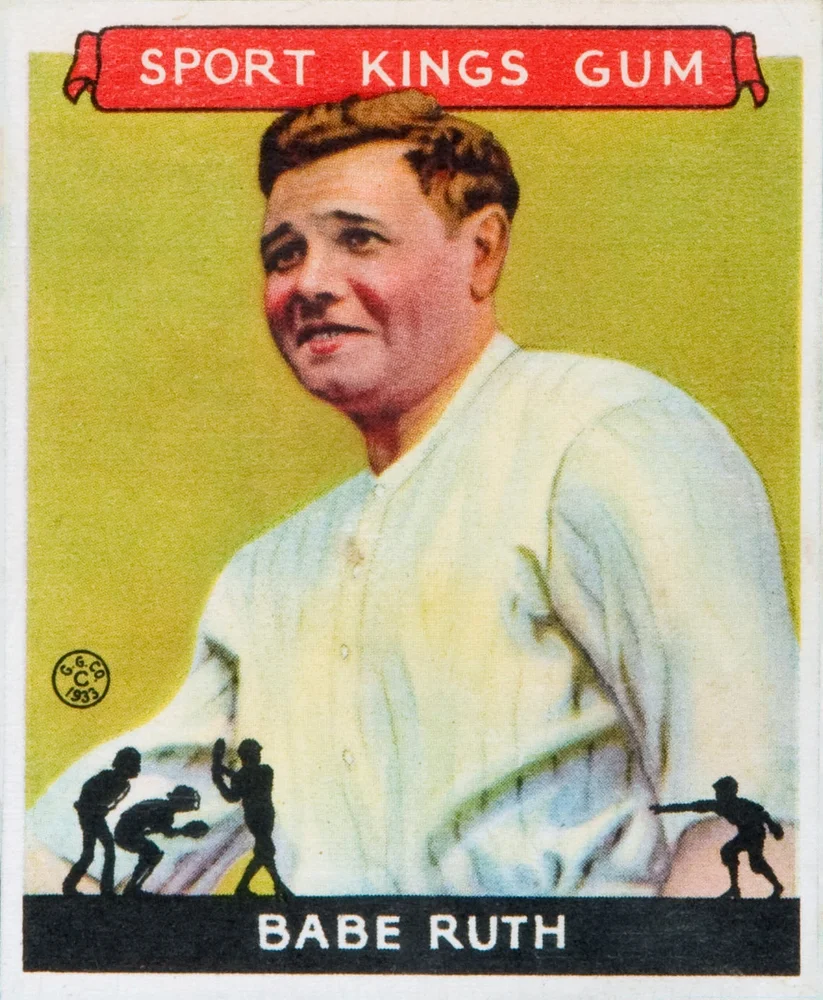
Baseball has several examples, but the 1933 Goudey Ruth cluster and major postwar rookies teach the pattern. Hockey has 1951 Parkhurst stars, 1966 Topps Bobby Orr, and 1979 O-Pee-Chee Gretzky depending on what era of the hobby you are trying to explain.
The collector lesson is the same across sports: the rookie card becomes important not merely because it is first, but because the issue around it has enough identity to amplify the player.
That is why some true rookies underperform relative to later, more symbolic cards. The set matters. The image matters. The issue's place in hobby history matters.
The set-builder card
Baseball set builders know this instinctively. The hard card is not always the biggest star. Sometimes it is the missing number, the high number, the short print, or the distribution headache. 1933 Goudey Nap Lajoie is the clean baseball example. T206 back combinations push the same instinct into a deeper level.
Hockey has its own version in key short prints, difficult regional issues, and tough high-grade commons from condition-sensitive releases. The names differ. The behavior matches.
Set builders in every sport eventually discover the same truth: supply problems inside a checklist can create pressure points that player fame alone does not predict.
The eye-appeal card
This one is universal and weirdly under-discussed.
Every sport has cards that technically share a grade range but behave differently because one issue photographs better, frames the player better, or carries design weight the market never forgets. Baseball has whole runs of this, from T206 portraits to 1952 Topps stars. Hockey has it too, especially where color, borders, and print sharpness separate a strong copy from an ordinary one instantly.
Collectors across sports will forgive a lot if a card looks right. They will also punish a lot if it does not. That is not irrational. It is the hobby telling you that presentation is part of value.
The card that wins is usually the one that best tells the player's story in a single glance.
Why this matters for pricing
Because cross-sport collectors get buried when they carry the wrong assumptions over.
A baseball collector entering hockey may overvalue checklist hierarchy and undervalue issue-specific condition quirks. A hockey collector entering baseball may underestimate how much set mythology and postwar iconhood drive the biggest cards. Both make the same mistake: they treat the player as the only stable input.
The player is rarely the only input.
You need to ask:
- Is this card the sport's icon card, or just the player's first card?
- Is the issue itself famous, or merely old?
- Is the scarcity structural, condition-driven, or symbolic?
- Does the market care more about the holder, the eye appeal, or the folklore?
Those are the real cross-sport translation questions.
Baseball and hockey actually rhyme
This is why the comparison is useful.
Both sports have:
- prewar or early issues collected partly as history
- postwar icons that pulled the hobby into a broader culture
- condition-sensitive releases where small visual differences move real money
- one or two giant cards that outsiders use as shorthand for the whole category
Once you understand those lanes, you stop asking whether one exact card equals one exact card and start asking what role each card plays in its own hobby. That is a much better map.
The point of the exercise
Cross-sport mapping is not trivia. It is a way of seeing collector behavior clearly.
If you understand why a baseball collector overpays for centered 1952 Topps eye appeal, you can understand why a hockey collector hunts a sharp Gretzky rookie. If you understand why the Wagner breaks normal pricing logic, you can understand why any sport's folklore object needs to be treated separately from ordinary comps. If you understand that set-builder scarcity can outrun star hierarchy, you stop getting surprised by weird checklist cards in every category.
Different cardboard. Same brain.