The 1909-11 T206 Set: Why It Still Sets Records
The wrong way to explain T206 is to say it still sets records because it is old and famous.
Plenty of things are old and famous. T206 keeps getting paid because it offers too many ways to care.
That sounds simple, but it matters. Sets stay alive when they can attract different kinds of collectors without losing their identity. T206 does that better than almost anything ever printed.
It works at every budget level
This is the first reason the set endures.
You can enter T206 with an honest low-grade common on a common back and still feel like you own something central to baseball history. Or you can chase Hall of Fame portraits, scarce backs, high-grade stars, rare combinations, or the hobby's most famous card. The set scales upward without collapsing.
That is rare. A lot of iconic issues become too concentrated in trophy hunting. T206 still has oxygen below the trophy level, which keeps the collector base broad and engaged.
The fronts are better than the category
People forget how much the art carries the market.
If T206 were historically important but visually dead, it would still matter, but not like this. The portraits and lithography give the set staying power with people who respond to images before they respond to checklist theory. Cobb alone could power a case. Mathewson, Johnson, Young, Chance, and the rest keep it deep.
That matters in auction rooms and private deals alike. A set that photographs beautifully keeps attracting new money because the appeal survives even when the historical details are fuzzy.
The back game never ends
T206 also solved the collector boredom problem before most issues existed.
Once you know the players, you can learn the poses. Once you know the poses, you can learn the backs. Once you know the backs, you can learn the combinations.
That layering means the set never sits still. A collector can spend years on common backs and then discover that scarce-back collecting is basically a second hobby bolted onto the first. Another collector can focus only on portraits. Another can build by team, by player type, by pose preference, or by ad-back challenge.
When a set can be collected that many ways, demand does not die with one generation's preferences.
It combines mythology with habit
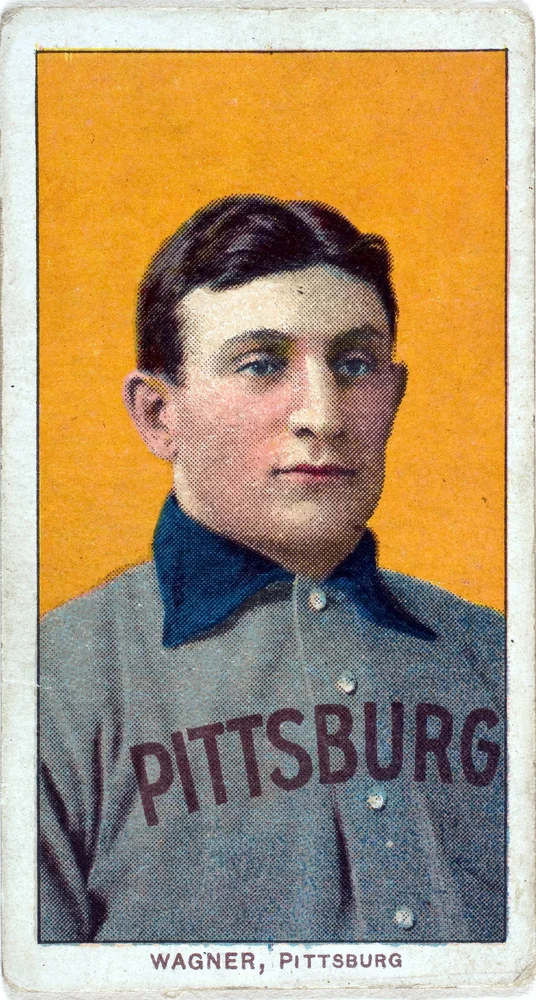
This is important. The Wagner, Plank, and Magie stories give T206 mythology. But mythology alone is not enough to keep the market healthy.
The set also supports habit. People can buy it regularly. They can trade it. They can upgrade it. They can chase one card at a show without pretending they are entering a museum acquisition process. That repeatability is what keeps a set alive between the record sales.
T206 gets mainstream headlines because of its trophy cards. It gets lasting collector loyalty because ordinary participation still feels meaningful.
The record-setting layer matters. The everyday collecting layer is what keeps the records possible.
Condition tells a real story
T206 is also one of the clearest sets for learning condition as a market force.
White borders show damage immediately. Backs matter. Paper loss matters. Creases matter. But the artwork is strong enough that even low-grade cards can remain desirable. That gives the set a wide usable condition range, which is another reason it stays liquid.
A lot of modern buyers are conditioned to think low grade equals dead card. T206 proves the opposite. A crease-free, well-centered low-grade portrait with honest wear can still outshine a technically similar card with uglier flaws. That keeps the collector eye engaged, not just the spreadsheet.
The set became a language
That may be the deepest reason it still sets records. T206 is not just a set. It is reference material for the whole hobby.
People use it to talk about:
- prewar scarcity
- back collecting
- trophy-card mythology
- low-grade eye appeal
- restoration risk
- hobby history itself
Once a set becomes the language people use to understand other sets, it is not leaving the center.
That is why every cross-sport comparison eventually drifts toward T206-style thinking. What is the iconic card? What is the difficult variation? What is the rare-back equivalent? What is the honest low-grade entry point? Those are T206 questions whether the collector realizes it or not.
Record prices are the symptom
People like the sale headline because it is easy. The bigger truth is that records happen because the base is so strong.
The hobby already agrees T206 matters. So when a special card appears, the bidding does not have to educate itself from scratch. The audience is waiting. That is a huge advantage over issues that only wake up when a top copy emerges.
T206 does not need to be rediscovered. It just needs another moment.
Why it still matters now
Because the set keeps proving that deep collectibility beats novelty.
In a market that constantly manufactures the next thing, T206 remains stubbornly alive because it was never built on hype. It was built on layers: art, scarcity, structure, back variation, iconic players, and enough room for both beginner desire and expert obsession.
That is why the set still sets records. Not because it is frozen in history. Because collectors keep finding new reasons to want what it already is.